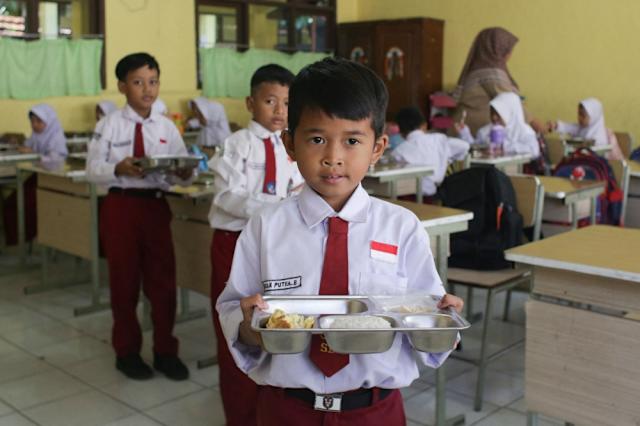
Following a string of food poisoning cases, the ambitious plan of the government of Indonesia to provide 80 million kids with free lunches has faced hurdles. After consuming the supplied meals, about 80 pupils from two high schools in Cianjur, which is south of Jakarta, fell ill just this week.
While most have been discharged from the hospital, the event is the most recent in a series of food poisoning instances connected to the program, which is a hallmark of President Prabowo Subianto’s administration. Samples from the students’ vomit have been sent for laboratory analysis, and authorities believe that careless food preparation is the cause. Cooks, packers, and delivery personnel who handled the food have been questioned by police.
Read Also: Adwoa Safo Vrs NPP: All Bombshells Of Political Rot Dropped
Adwoa Safo Must Respect Our Late Mother – Gertrude Quashigah’s Family
A 16-year-old student described the shredded chicken in the meal as having an “unpleasant odour,” adding, “I felt dizzy, nauseous and vomited.” While free school meal programs have been effective in improving health, academic performance, and attendance in other countries, Indonesia’s $28 billion version has become a target of food safety concerns and anti-government protests. Protesters have criticized the hefty price of Prabowo’s free school meals, with signs reading, “Children eat for free, parents are laid off.”
A Campaign Promise By Prabowo Subianto, President Of Indonesia

The free meals program, a centerpiece of Prabowo’s presidential campaign, aimed to tackle stunting, a condition caused by malnutrition affecting a fifth of Indonesian children under five. Prabowo stated in 2023 that the initiative would help children “grow taller and emerge as champions.” Since taking office last October, Prabowo’s approval ratings have reached 80% due to this program and other populist policies. In its initial phase, which began in January, free school meals have been provided to 550,000 students in 26 provinces. However, Maria Monica Wihardja, a visiting fellow at ISEAS-Yusof Ishak Institute, argues that there has been “no evidence” of “widespread urgency” for free school meals.
A 2024 national survey indicated that less than 1% of Indonesian households went without any meals for at least one day in the past year. Since January, food poisoning incidents have raised concerns about the free meals. In February, Michelle, an elementary school student in East Nusa Tenggara province, was among several who suffered suspected food poisoning. She reported that the food was “bland and stale” and caused her a stomach ache. Following the incident, some parents began preparing homemade lunches for their children.
After the recent food poisoning in Cianjur, authorities have pledged to improve food safety processes. “We must improve quality,” stated Dadan Hindayana, head of the National Nutrition Agency. Eliza Mardian, a researcher at the Center of Reform on Economics Indonesia, attributes the problems to a “lack of mature and in-depth planning before this program was launched.” She argues that “the haste ends up sacrificing quality and effectiveness, which actually worsens the public’s perception of this programme.”