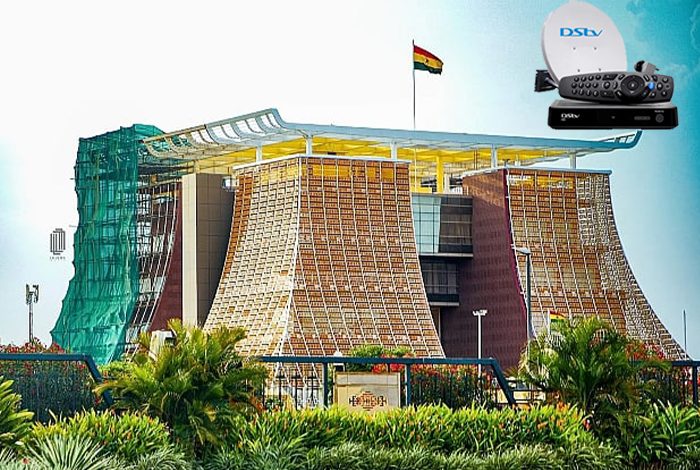
In an effort to reduce unnecessary public expenditure, the Mahama administration has prohibited all offices within the Jubilee House, Ghana’s presidential seat, from subscribing to DStv or any satellite television services, according to Government Spokesperson Felix Kwakye Ofosu.
The policy was announced during an interview on JoyNews on Tuesday, June 10, 2025. Mr. Kwakye Ofosu revealed the stringent measure, stating, “I can reveal to you that if you come to this house, there is no office in this house that is allowed to subscribe to DStv or any satellite television.” He explained that this decision, while seemingly minor, is part of a larger strategy to eliminate wasteful spending. “You would say that that is a trivial matter, but he has done that.
Because when you computed the cost, it was significant money,” he elaborated, highlighting the financial significance of the policy. The ban restricts televisions at the Jubilee House to local channels only, a point Mr. Kwakye Ofosu demonstrated during the interview. “You can turn on the television that you see here, you will find that I’m only limited to local television stations,” he noted, underscoring the administration’s resolve to lead by example.
The policy is expected to extend beyond the presidency to other government agencies, with the aim of safeguarding taxpayer funds across the public sector. Mr. Kwakye Ofosu praised President Mahama’s leadership, describing it as a model of modesty and accountability.
Related Stories
President Mahama Scraps E-Levy, Betting Tax & Emissions Levy
“This is a man deeply committed to making savings for the Ghanaian people. Governance necessarily involves taking tough decisions… but the citizenry must see corresponding levels of modesty on the part of government officials—and that’s what President Mahama is committed to doing,” he stated, framing the initiative as part of a larger ethos of responsible governance.
The decision comes at a time when Ghanaians are increasingly vocal about the need for fiscal restraint in government operations. By targeting expenditures like satellite TV subscriptions, the administration aims to demonstrate its responsiveness to public concerns over resource allocation. Some political analysts believe this move could resonate with citizens facing economic pressures, although others may question its overall impact on the national budget.
As the Mahama administration continues its cost-cutting efforts, the ban on DStv at the Jubilee House signals a broader intent to instill fiscal discipline across government institutions. For now, the presidency’s televisions will remain tuned to local channels, a symbolic gesture of a government striving to align its actions with the aspirations of the Ghanaian people.
Background: DStv Ghana Subscription Price Increases
DStv Ghana offers a variety of packages with different viewing preferences and budgets. DStv’s website lists the available packages, including their monthly subscription prices, channel selections, and included features.
These range from the basic DStv Access to the premium DStv Premium, offering a variety of entertainment options.
In March 2025, MultiChoice Ghana, the operator of DStv, announced plans to increase subscription prices across all its packages by an average of 15%, effective April 1, 2025. This was the third price increase in less than a year, following two increases in 2024 that sparked widespread subscriber backlash. The price hikes affected all DStv tiers, with MultiChoice citing rising operational costs and economic pressures as the primary drivers.
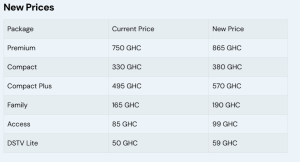
CUTS International, a consumer advocacy group, voiced strong concerns over the move, criticizing MultiChoice for providing insufficient notice and urging the company to adopt fairer communication practices to allow subscribers ample warning ahead of fee adjustments. “Short notices erode trust and burden consumers,” a CUTS spokesperson said, urging DStv to rethink its approach. The repeated price increases occurred against the backdrop of Ghana’s economic challenges at the time, including inflation and currency depreciation, placing a strain on household budgets.



Aban papapaa nie, more too come 🤣🤣🤣🤣🤣