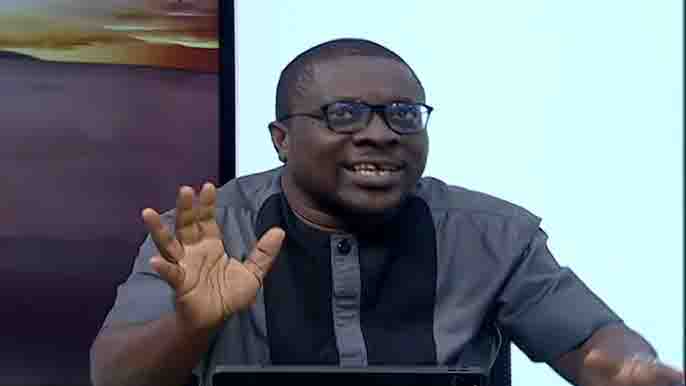
CJ Removal Case: Private legal practitioner and spokesperson for the Movement for Change, Andrew Appiah Danquah, has voiced strong concerns about what he describes as the increasing politicization of the ongoing efforts to remove Chief Justice Gertrude Torkornoo from office.
Speaking on the JoyNews AM Show on May 23, 2025, Danquah expressed grave concerns that the crucial legal processes are being diverted from their rightful course due to what he termed “unnecessary political interference.” He argued that the Chief Justice’s case is “sinking” under the weight of these pervasive political dimensions, thereby undermining the very foundation of the rule of law in Ghana.
Danquah’s powerful plea for political actors to cease their meddling in judicial matters underscores a critical threat to public confidence in the nation’s legal institutions. He passionately asserted that “Politicians should not destroy the rule of law. Enough of the politics. Let the process move on so that other equally important issues the country is grappling with can be resolved.” His remarks highlight a deep-seated apprehension that the integrity and independence of the judiciary are being sacrificed at the altar of political expediency, potentially leading to a widespread erosion of trust among citizens.
Background Of CJ Removal
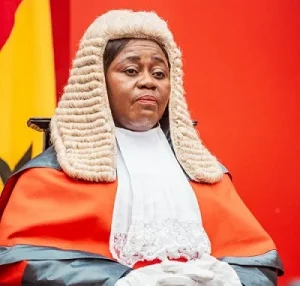
The heightened public debate surrounding the Chief Justice’s potential removal gained significant traction on March 25, 2025, when reports emerged that President John Mahama had initiated consultations with the Council of State. This followed the submission of three distinct petitions advocating for the removal of Chief Justice Gertrude Sackey Torkornoo. Felix Kwakye Ofosu, the Minister for Government Communications, confirmed this development in a statement, emphasizing that the petitions were forwarded to the Council of State in strict adherence to the constitutional process outlined in Article 146 of the 1992 Constitution.
However, President Mahama’s decision to proceed with these consultations quickly encountered a barrage of legal challenges. Among the initial lawsuits were those filed by Vincent Ekow Assafuah, the Member of Parliament (MP) for Old Tafo, and Ebenezer Osei-Owusu, a private citizen. Both sought to halt the removal process, arguing against its constitutionality and potential implications for judicial independence.
Legal Battles and Constitutional Interpretations
The legal offensive against the Chief Justice’s removal intensified with Counsel for the Old Tafo MP filing a motion for an interlocutory injunction. This motion aimed to restrain the President and the Council of State from continuing their consultations regarding the Chief Justice’s removal under Article 146 until the Supreme Court had delivered a final determination on the substantive action. The application for this crucial interlocutory injunction was slated for a hearing on Wednesday, April 2, 2025, signaling the urgency with which the matter was being pursued in the courts.
Concurrently, Ebenezer Osei-Owusu launched his own robust challenge, contesting the very procedure being employed in the efforts to remove Chief Justice Torkornoo. Osei-Owusu’s core argument revolved around the assertion that the current process violates the Chief Justice’s fundamental constitutional right to a fair hearing. He contended that certain steps taken by the relevant authorities fell woefully short of due process and, more alarmingly, posed a direct threat to the cherished independence of the judiciary.
A pivotal point of his case centered on the constitutional requirement that the Chief Justice be formally served with the petition(s) for her removal and afforded a full and proper opportunity to respond before any prima facie determination is made by the President in consultation with the Council of State.
Osei-Owusu’s legal challenge went beyond procedural irregularities; it directly questioned the legitimacy of the removal process itself, asserting that it was overtly politically influenced and designed to undermine judicial independence. He sought a court order to invalidate or withdraw any petitions that President Mahama had forwarded to the Council of State concerning the Chief Justice’s removal. Furthermore, he requested any additional orders or directions the court deemed necessary to uphold his claims and safeguard constitutional principles.
Current Status of Legal Challenges and Suspension
As of now, the legal landscape surrounding the Chief Justice’s removal has seen significant developments. Four out of the five initial suits challenging the removal process have been dismissed, streamlining the legal battle. However, a new, critical suit has emerged, filed by the suspended Chief Justice herself. This fresh challenge underscores her determination to contest the legitimacy of the process and defend her position.
Prior to her suspension, Chief Justice Gertrude Torkornoo formally requested copies of the petitions seeking her removal from office that had been submitted to President Mahama. This request was a strategic move aimed at ensuring her constitutional right to respond to the allegations before any conclusions were reached following the consultations between the President and the Council of State, as meticulously stipulated under Article 146(6) of the Constitution.
However, on April 22, 2025, a significant turn of events occurred: President John Mahama suspended Justice Torkornoo as Chief Justice. The President cited a preliminary investigation that, in consultation with the Council of State, found “sufficient grounds for an inquiry into her conduct” as provided for by Article 146 of the 1992 Constitution. This suspension marks a pivotal moment in the unfolding drama, elevating the stakes and deepening the controversy.
The Constitutional Framework for CJ Removal
The process for removing a Justice of the Superior Courts in Ghana, including the Chief Justice, is rigorously defined by Article 146 of the 1992 Constitution. This article stipulates that a Justice can only be removed from office for one of three specific reasons: specified misbehavior, incompetence, or inability to perform their duties due to physical or mental infirmity.
In line with the Supreme Court’s definitive ruling in Frank Agyei Twum vs. Attorney-General, the procedure for the removal of the Chief Justice is clear. Should a petition be filed for the Chief Justice’s removal, it must first be submitted directly to the President. The President then has the constitutional duty to forward this petition to the Council of State for consultation regarding the establishment of a prima facie case – essentially, to determine if there are sufficient initial grounds for a full inquiry.
Crucially, Article 146(6) provides specific instructions when the petition involves the Chief Justice. In such a scenario, the President, acting in consultation with the Council of State, is mandated to appoint a specialized committee. This committee is to comprise two Justices of the Supreme Court, with one designated as chairman by the President, and three additional individuals who are explicitly neither members of the Council of State, Parliament, nor legal practitioners.
The primary role of this committee is to thoroughly investigate the petition and subsequently recommend to the President whether or not the Chief Justice should be removed from office. A cornerstone of this constitutional process is that the President is obligated to follow the committee’s recommendations in their final decision-making process, underscoring the independent nature of the inquiry and the limited discretion of the President i the final outcome.
Related Stories
Former CJ Sophia Akuffo Backs Mahama’s Call for Constitutional Review
Can President Mahama Remove Chief Justice Torkornoo? Everything You Need To Know




If I was the Chief Justice Getrude Torkornoo, I would have resign already