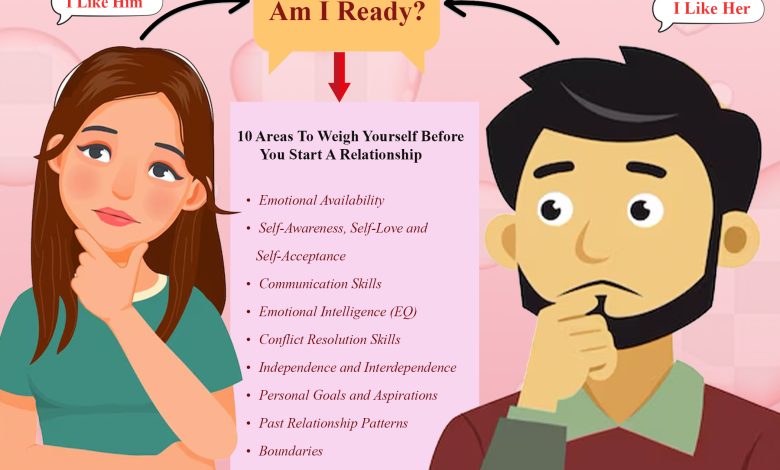
Starting a new relationship can be an exciting and lovely experience, especially with all the butterflies flying in the bellies. However, it’s essential to take a step back and assess your own self before diving into a new partnership. Evaluating your own emotions, values, and goals can help you determine whether you’re ready for a relationship and what you’re looking for in a partner.
In this article, we’ll explore 10 areas to weigh or assess your own self before starting a relationship.
1. Emotional Availability:
Checking your emotional availability before starting a new relationship implies taking an honest look at your own capacity and readiness to engage in a healthy and intimate partnership. It involves understanding your current emotional state, your ability to connect with another person on a deeper level, and your willingness to be open, vulnerable, and responsive to their emotional needs and your own.
Understanding your current emotional capacity helps you enter a relationship with realistic expectations for yourself and your partner. Entering a relationship when you’re emotionally unavailable can lead to hurt and disappointment for both you and your partner. You might struggle to meet their emotional needs, and they might feel rejected or neglected, leading to conflict and potential heartbreak. However, when both partners are emotionally available, the relationship is more likely to thrive, characterized by deeper connection, better communication, and greater overall satisfaction. Consider these questions o guide you in accessing your emotional availability:
- Are you emotionally stable and secure?
- Have you healed from past traumas or relationships?
- Are you ready to open yourself up to the possibility of hurt or rejection?
- Are you truly ready for a committed relationship?
- Are you able to give emotionally and be present for someone else?
- Are you ready to allow yourself to be seen authentically, including your imperfections and needs?
- Are you still grappling with personal issues that might hinder your ability to connect deeply?
- Are you willing and able to invest time and emotional energy into building and nurturing a relationship?
- Do you have the capacity to trust another person and allow for emotional closeness
2. Self-Awareness, Self-Love and Self-Acceptance:
Being in a relationship requires that you know your partner. But how do you know your partner when you don’t even know yourself? Knowing yourself, and assessing your self-love and self-acceptance before starting a relationship means taking an introspective journey to understand the depth of your positive regard for yourself and your ability to embrace all aspects of who you are, both your strengths and your perceived weaknesses. Understanding your own feelings, needs, and patterns in relationships. This includes recognizing any fears, insecurities, past hurts, or defense mechanisms that might hinder emotional intimacy.
When you genuinely love and accept yourself, you tend to project a sense of wholeness and confidence that is attractive to emotionally healthy individuals. You are less likely to settle for partners who mistreat you or don’t value you, you are less likely to become overly dependent on a partner for validation or happiness, and finally helps to mitigate insecurities and the tendency towards jealousy. Consider these questions o guide you in accessing your self:
- What are your strengths and weaknesses (specifically in relationships)?
- What are your values and priorities?
- What are your non-negotiables or deal-breakers in a relationship?
- Do you genuinely love and accept yourself, flaws and all?
- Can you maintain a healthy sense of self-worth independent of a relationship?
- Or do you rely on others to validate your self-esteem?
- Are you able to prioritize my own needs and desires?
- Are you willing to take responsibility for my own happiness and fulfillment?
3. Communication Skills:
Your communication skill plays a vital role in your relationship. Before starting a relationship, you need to take a deliberate look at how effectively you express yourself, listen to others, and navigate conversations, particularly in emotionally intimate contexts. This involves understanding your typical communication style, identifying your strengths and weaknesses, and considering how your communication habits might impact a romantic partnership.
Effective communication fosters mutual understanding and deeper emotional connection. When you can express yourself clearly and listen attentively, you create a space for intimacy and empathy. Poor communication is a primary driver of misunderstandings and conflict in relationships. Open and honest communication builds trust and security within a relationship. Knowing that you can talk openly and be heard creates a safe and supportive environment.
- What is your communication style? (You may do well at verbal, written, body language, or interactive communications)
- How effectively do you communicate your needs and feelings?
- Are you a good listener?
- Can you express yourself assertively and respectfully?
- How open are you to receiving feedback?
- Do you tend to avoid conflict or engage in unproductive arguments?
4. Emotional Intelligence (EQ):
Emotional Intelligence is your ability to understand and manage your own emotions, as well as recognize and influence the emotions of others, particularly within the context of an intimate partnership. It involves evaluating your capacity for empathy, self-awareness, self-control, social skills, and motivation as they relate to forming and maintaining healthy emotional connections.
A good emotional intelligence equips you with the skills to manage disagreements constructively, understand your partner’s perspective, regulate your own emotions during conflict, and work towards mutually agreeable solutions. It enhances your ability to communicate clearly, both verbally and nonverbally. Moreover, being aware of your own emotional needs and tendencies can help you identify partners whose emotional styles are more compatible with yours, increasing the likelihood of a harmonious relationship.
- Can you identify and understand your own emotions and those of others?
- Can you manage your emotions effectively, especially during times of stress or conflict?
- Do you have the ability to understand and share the feelings of others
5. Personal Goals and Aspirations:
Assessing your personal goals and aspirations before starting a relationship means taking time for introspection to clearly define what you want to achieve in various aspects of your life, independent of a romantic partner. This involves identifying your ambitions, dreams, values, and the direction you envision for your future, encompassing your career, personal development, social connections, lifestyle, and overall well-being.
Knowing your own path helps you maintain your sense of self and individuality within the relationship. You are less likely to lose yourself or abandon your dreams to solely accommodate a partner. Understanding your goals allows you to seek out partners whose values and aspirations are broadly compatible with yours. This reduces the likelihood of future conflicts arising from fundamentally different life directions. Moreover, significant discrepancies in long-term goals (e.g., wanting children vs. not, career ambitions requiring relocation) can lead to major conflicts down the line.
- What is truly important to you in life?
- What are your short-term and long-term goals?
- How much time and energy are you willing to invest in them?
- How do you envision your future?
- Are you on track to achieve your personal and professional aspirations?
- Are you looking for a partner who shares similar goals and aspirations?
6. Past Relationship Patterns:
There is also the need to take a thoughtful and honest look back at your previous romantic experiences to identify recurring behaviors, dynamics, and outcomes before starting a new relationship. This involves analyzing the roles you’ve played, the types of partners you’ve been drawn to, the common issues that arose, and how those relationships ultimately ended.
Without understanding your past patterns, you are more likely to unconsciously repeat the same mistakes or fall into similar unhealthy dynamics in your new relationship, leading to similar negative outcomes. Analyzing past relationship experiences can shed light on your unmet needs and emotional triggers, allowing you to communicate them more effectively in a new relationship and manage your reactions better. Reflecting on your past relationships is a powerful tool for self-discovery and personal growth. It helps you understand yourself better in the context of intimacy and identify areas where you can develop emotionally.
- Reflect on your past relationships. What worked well? What didn’t?
- What did you learn from my past relationships?
- Did you consistently fall into the same unhealthy patterns?
- What patterns or behaviors do I want to avoid in future relationships?
- Have you taken the time to heal and process my emotions from past relationships?
- Why did your past relationships end. Were there common factors or your own behaviors that contributed to the breakup?
- Recognize any consistent ways you’ve acted in relationships, both positive and negative (such as being overly accommodating, avoiding conflict, needing constant reassurance, being critical).
7. Boundaries:
Boundaries are very important in every relationship. Assessing your boundaries implies clearly understanding and defining your personal limits – what you are comfortable with, what you need to protect your physical, emotional, mental, and spiritual well-being, and what you will and will not tolerate in a relationship. It involves recognizing your rights and communicating them effectively.
Boundaries are essential for safeguarding your physical, emotional, mental, and spiritual health. Knowing them allows you to prevent others from overstepping and causing you harm or discomfort. Clearly defined boundaries communicate to a potential partner how you expect to be treated. This sets the stage for a relationship built on mutual respect. Strong boundaries help you maintain your sense of self and your life outside the relationship, preventing you from becoming completely enmeshed or losing your identity.
- What are your personal boundaries?
- Are you able to communicate and enforce them effectively?
- Do you tend to people-please or prioritize the needs of others over your own?
- How well do you respect the boundaries of other people?
- Reflect on past experiences where your boundaries were crossed. What impact did those violations have on you?
8. Conflict Resolution Skills:
Effective conflict resolution skills are essential in any relationship. When different people come together, varying opinions and perspectives are inevitable. One person may occasionally do something that the other dislikes. As a popular Ghanaian adage states, even the teeth and tongue sometimes clash. Disagreements are bound to occur in relationships, regardless of how deeply people love each other. The crucial question is: what happens after a disagreement? Do you give up, or do you resolve the issue?
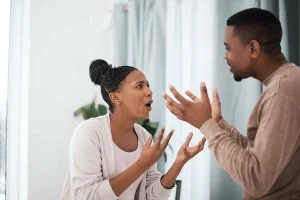
Assessing your conflict resolution skills before entering a relationship involves honestly evaluating how you typically handle disagreements, arguments, and differing opinions in your interactions with others, particularly in close or emotionally charged situations. This means understanding your preferred strategies, your strengths and weaknesses in navigating conflict, and the overall impact your approach has on your relationships.
How couples handle conflict is a significant predictor of relationship longevity and satisfaction. Poor conflict resolution can lead to hurt feelings, resentment, and damage to the emotional bond in a relationship. If you have a history of unhealthy conflict patterns in past relationships, self-assessment provides an opportunity to recognize these patterns and consciously choose different approaches in a new relationship.
- How do you handle conflict and disagreements? (do you get defensive, shut down, get angry, or seek to understand)
- Are you able to forgive yourself and others for past mistakes?
- Can you let go of grudges and resentments?
- Are you able to remain calm and composed in heated situations?
- Are you willing to compromise and find mutually beneficial solutions?
9. Independence and Interdependence:
The foundation of a thriving relationship is often built upon a clear understanding of individual needs for both space and togetherness. Assessing your personal levels of independence and interdependence before committing to a partnership can significantly contribute to its success, allowing for a harmonious blend of autonomy and mutual support. This involves examining your ability to maintain your individual identity, needs, and activities while also being able to mutually rely on and support a partner.
Remember, if you lean too heavily on a partner for your sense of worth or to meet all your needs, it can create an unhealthy dynamic and put excessive pressure on the relationship. Assessing your independence helps you avoid this. When both partners maintain a degree of independence, it fosters mutual respect for each other’s individuality and needs. On the other hand, overly high interdependence can lead to enmeshment, where boundaries become blurred and individual identities are lost. Assessing your need for independence helps prevent this. When individuals maintain their own support systems and sense of self, the relationship is more resilient to external stressors.
- Do you value your independence and personal space?
- Can you maintain a healthy balance between independence and interdependence within a relationship?
- Are you comfortable spending time alone?
- How well can you meet your own needs (emotional, financial, social, practical) without solely relying on a partner?
- Do you have a strong individual identity, with your own values, hobbies, beliefs, and goals that are not solely defined by a relationship?
- Do you have the ability to make your own decisions and take responsibility for your own life?
- Can you work together with a partner on shared goals and responsibilities.
- Do you have the capacity to offer and receive emotional, practical, and other forms of support within a relationship.
- Can you balance “me” and ‘we” in necessary situations?
10. Self-Care Practices:
Assessing your self-care practices before starting a relationship means taking inventory of the habits, routines, and activities you engage in to nurture your physical, emotional, mental, and spiritual well-being independently of a romantic partner. It involves understanding what helps you feel grounded, healthy, and resilient on your own.
Strong self-care routines ensure that your fundamental needs are met, making you a more balanced and resilient individual, regardless of your relationship status. When you are well-cared for, you are more likely to be emotionally available, present, and positive in your interactions with a partner. Healthy self-care habits equip you with better coping mechanisms to handle the inevitable stresses that arise within a relationship. Neglecting your own needs can lead to burnout and resentment, which can negatively impact the relationship.
- Do you prioritize your physical and mental health?
- Do you engage in self-care activities that nourish your mind, body, and soul?
- Do you prioritize self-care activities such as exercise, healthy eating, relaxation techniques, and spending time in nature?
- How do you connect with others who support and uplift you, outside of a romantic relationship (e.g., spending time with friends and family)
- What practices connect you to a sense of meaning, purpose, or something larger than yourself (e.g., meditation, spending time in nature, religious practices).
- How do you cope with stress and build resilience?
By honestly assessing yourself in these areas, you can gain valuable insights into your own needs, desires, and relationship patterns. This self-reflection can help you attract a partner who is compatible with you and build a healthy, fulfilling, and long-lasting connection.
Continue Reading
Characteristics of Healthy and Unhealthy Relationships
This is What Happens to Your Relationship After You Cheat
11 Signs That Suggest Your Partner Is A Narcissist