Experts are calling for a definitive resolution to issues of colonial injustice in Africa, believing they significantly hinder the continent’s progress. These calls were amplified as the continent commemorated Africa Day on Sunday, an annual observance marking the establishment of the Organization of African Unity (OAU) on May 25, 1963.
The OAU, founded by Pan-African leaders, initially focused on liberating the continent from colonial rule. In 2002, it transitioned into the African Union (AU), which now prioritizes the prosperity and integration of Africa. However, the lingering effects of colonialism continue to resonate, making the original purpose of Africa Day as relevant today as it was in the past. Celebrated both within Africa and by the African diaspora globally, the day recognizes the continent’s ongoing struggles for true liberation. It’s also sometimes referred to as African Liberation Day.
This past Sunday, experts convened in Dakar, Senegal, bringing together representatives from governments, civil society organizations, youth groups, and regional institutions. Their discussions centered on identifying the most pressing issues impacting the continent’s development and strategies to overcome them.
Brian Kagoro, the managing director of the Open Society Foundations, specifically outlined six key areas he believes should be addressed through reparations. These include, “acknowledging and addressing the profound harm and continuing harm that chattel enslavement and colonial, apartheid and the cold war caused to Africans and it’s acknowledging that these have had a lasting impact…on communities, on individuals and a lasting impact on economies.” Kagoro’s emphasis was on the lasting economic, social, and personal consequences that these historical injustices have inflicted.
Reflecting a growing commitment to historical justice, the continental body, the African Union, has prioritized this issue on its agenda, a decision heavily influenced by the global conversation spurred by the Black Lives Matter protests in 2020.
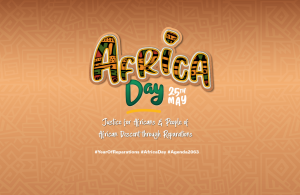
At the 38th AU Summit, held in February, African heads of State formally launched the 2025 AU theme: “Justice for Africans and People of African Descent Through Reparations.” This initiative is designed to forge a common African position on the issue of reparations and enhance the AU’s capacity to provide technical assistance to its member states as they pursue reparative justice.
It is important to note that calls for reparations are not new. Governments and civil society organizations have consistently championed these efforts even before the end of the decolonization period.
Adding to this momentum, the year 2025 marks the 21st anniversary of the founding of the Pan-African Parliament. Its president, Fortune Charumbira, has added his voice to the growing chorus of leaders calling for reparative justice, underscoring the continued importance of addressing these historical wrongs.
In a statement marking Africa Day, Brian Kagoro emphasized that “Reparative justice is not simply about compensation; it is about truth, healing, and transformation. It is about acknowledging historical crimes, holding accountable those who benefited from them, and ensuring redress that restores dignity, rebuilds trust, and reforms the systems that continue to perpetuate inequality.”
Despite facing immediate and pressing challenges like conflicts in Sudan, the Democratic Republic of Congo, and the Sahel region, the African Union (AU) is prioritizing reparatory justice, recognizing its enduring impact on many African nations today.
The AU is planning to launch new mechanisms to coordinate its efforts. These include an AU Secretariat for Reparations, a Committee of Legal Experts to provide legal counsel on reparations claims, and a Global Reparations Fund to serve as an advocacy platform.
While African governments have previously pursued reparations individually, the AU intends to develop an “African Common Position on Reparatory Justice” and integrate it into the strategies of member states and Regional Economic Communities (RECs) through high-level meetings, consultations, and ministerial events.
The AU also plans to collaborate with other continental bodies, like Caricom (a group of 21 developing countries from the Americas and the Caribbean), to convene an Africa-Diaspora summit and host a high-level event at the UN General Assembly. These initiatives are aimed at enhancing cooperation with other stakeholders who support reparative justice measures.
The Pan-African Multi-Stakeholder Policy Dialogue on Reparative Justice, held in Dakar under the theme “Reparative Justice for Africans: Reclaiming Dignity and Building Accountability,” was designed to contribute to this broader agenda. The dialogue included expert presentations, intergenerational discussions, cultural reflections, live audience engagement, and media interaction.
Renowned voices in global activism, such as Trust Africa’s Dr. Ebrima Sall, human rights expert and lawyer Ibrahima Kane, and Prof. Mame Penda from Gaston Berger University, participated in the discussions.
The event was jointly organized by the Open Society Foundations, National Youth Council of Senegal, West African Democracy Radio, the AU-ECOSOCC, Junior Chamber Senegal, and The ONE Campaign Francophone Africa Directorate. Desire Assogbavi, Advocacy Advisor at Open Society Foundations, stated, “This is a historic opportunity to reclaim African dignity and demand transformation through an intergenerational and policy-driven conversation on reparative justice.”
Brenda Mofya, head of Oxfam International’s UN Office in New York, presented a paper advocating for the removal of neo-colonial structures that continue to impede Africa’s liberation. She called for a review of the United Nations Charter, which she believes underlies many of the problems facing the world, particularly Africa. Mofya argued that the current composition of the United Nations Security Council (UNSC) makes advocating for Africa’s interests untenable.
“All these demands will become meaningful with reform of the United Nations Security Council,” she stated, emphasizing, “Much of the problems Africa faces are directly as a result of some of the decisions by the big powers.”
Related Stories
UK’s Lammy Rejects Cash Reparations for Slavery
African Leaders To Renew Push For Slavery Reparations