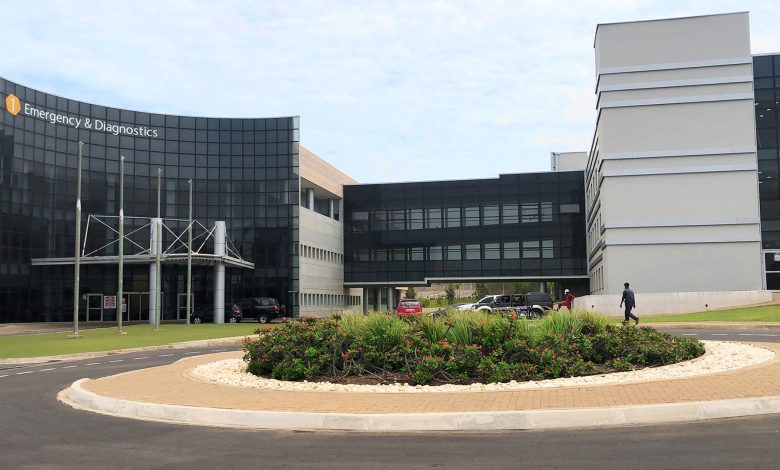
The University of Ghana Medical Centre (UGMC) is set to revolutionize specialized medical care in Ghana, with plans to introduce hair transplant procedures by the end of the year. This initiative is part of the UGMC’s broader vision to become a world-class quaternary hospital, offering advanced medical solutions not commonly available in the country.
The UGMC will soon begin performing hair transplants as a form of plastic surgery for individuals experiencing baldness. Dr. Baffoe Gyan, the Director of Medical Affairs at the UGMC, stated that the center is in the final stages of rolling out this innovation to the public after successful pilot programs.
Hair transplant is a surgical procedure, as defined by the World Health Organization (WHO), where hair follicles are moved from a donor area (typically the back or sides of the scalp) to a bald or thinning recipient area.
Dr. Gyan revealed that the lead surgeon for the hair transplant innovation received specialized training in New York, and initial trials, including on one of their own doctors, have shown promising results. The UGMC is currently focused on building a sufficiently large team of trained medical staff to meet anticipated demand before a full public launch.
The WHO identifies various causes of baldness, including genetics, hormonal changes, medical conditions, stress, and certain medications. The most prevalent type, androgenetic alopecia (male or female pattern baldness), is largely hereditary and linked to aging and hormones.
Read Also
New Blood Type Discovered, Guada Negatve — And Only One Person In The World Has It
Aspiring to Quaternary Status
The UGMC’s overarching goal is to achieve quaternary hospital status, signifying a facility that provides the most specialized and advanced medical care. Dr. Gyan emphasized that this requires undertaking procedures not commonly offered elsewhere.
“For us to get there, we need to do things that are commonly not done,” Dr. Gyan stated. He highlighted the UGMC’s unique position as the only institution in Ghana that encompasses all three arms of medical care.
In line with this ambition, the UGMC has recently performed several trailblazing medical procedures:
- Catheter ablations
- Hole-in-heart surgeries
- Laparoscopic gastric sleeve surgery, performed on July 25, 2025, believed to be the first of its kind in Ghana.
Additionally, the center is exploring bone marrow transplants and has already successfully conducted eight kidney transplants.
Historic Laparoscopic Gastric Sleeve Surgery
On Friday, July 25, 2025, the UGMC achieved a significant milestone by performing Ghana’s first-ever pin-hole laparoscopic gastric sleeve surgery on an obese patient. This bariatric procedure involves removing a large portion of the stomach to create a smaller, sleeve-shaped stomach, thereby restricting food intake and promoting weight loss.
The three-hour surgery was carried out by a 30-member medical team, including surgeons, anaesthetists, nurses, and nutritionists. The team was led by Dr. Kenedy Ondede, Head of the Surgery Department at Kenyatta National Hospital in Nairobi, Kenya. Key members from UGMC included Dr. Dominic Darkwa, a General Surgeon Consultant, and Dr. Emmanuel Nachelleh, Head of the Surgery Department.
Dr. Ondede explained that the surgery is performed through five small incisions, each less than one centimeter, allowing for minimal invasiveness. Approximately 60 to 80 percent of the patient’s stomach is removed, leading to significant weight loss as the body utilizes stored fat.
Regarding side effects, Dr. Ondede emphasized that the intended outcome is weight loss, which is a positive effect for obese patients. He noted that while food intake is restricted, a balanced diet with necessary supplements ensures the patient’s well-being. The advantages of the surgery, such as reducing risks of heart problems, diabetes, joint issues, and breathing difficulties associated with obesity, far outweigh the disadvantages.
Dr. Darkwa expressed pride in the UGMC’s pioneering role in this surgery, highlighting its importance in addressing the increasing prevalence of non-communicable diseases, including obesity, which affects an estimated 17 to 25 percent of the Ghanaian population.
Human Resource Development
To sustain these advanced medical interventions, Dr. Gyan urged Ghanaians abroad with expertise in innovative medical solutions to return home and contribute to building local capacity. The UGMC aims to be capable of performing “almost everything medically possible” by 2027 and seeks collaboration from experts both within Ghana and internationally.