Ever wondered about the mystery of goosebumps? Those tiny bumps that erupt on your skin when you’re cold or frightened?
When we experience something that ignites powerful emotions – excitement, awe, nostalgia, or even a chill – our body’s primal response kicks in.
This activation triggers the release of hormones like adrenaline, which can then lead to physical reactions such as the appearance of goosebumps.
Decoding Goosebumps: The Science and Emotions Behind Piloerection
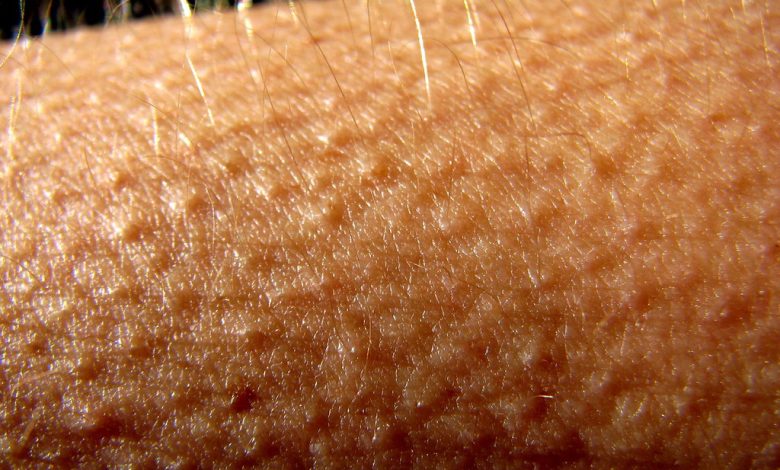
What exactly are goosebumps? Goosebumps are small bumps on your skin that happen when tiny muscles at the bottom of each hair pull tight. This contraction makes the hairs stand on end, giving the skin its characteristic bumpy texture. Let’s delve into the science behind this phenomenon!
Goosebumps are actually a reflex, a vestige from our evolutionary past when our ancestors had significantly more body hair. Whether we feel cold or experience a powerful emotion like fear, these tiny muscles surrounding our hair follicles contract, causing our hair to stand upright and creating those bumps.
In the past, our ancestors’ body hair helped them stay warm by trapping a layer of air close to their skin. Goosebumps also served a protective function: when threatened, raised hair made them appear larger, potentially intimidating potential predators. However, as humans evolved and lost much of our body hair, goosebumps became less essential for both warmth and protection.
Today, goosebumps primarily serve as a quirky reminder of our shared evolutionary history. So, the next time you feel those little bumps appear, remember that it’s a fascinating physiological response rooted in our past. While our body hair has thinned significantly over time, the arrector pili muscles – the tiny muscles responsible for goosebumps – still remain.
Here’s a breakdown of the process:
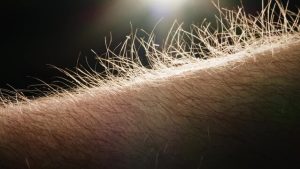
Why Do We Get Goosebumps? The Emotional and Environmental Triggers
https://bigfamilyonline.com/the-body-can-produce-heat-to-boil-water-in-just-30-minutes-this-is-how/


