
Ethiopia, officially the Federal Democratic Republic of Ethiopia, is a landlocked country situated in the Horn of Africa. It holds the distinction of being the second-most populous nation on the African continent, after Nigeria, and the tenth-most populous globally. Its capital and largest city is Addis Ababa. The country is also known for its unique cultural heritage, including its own alphabet, calendar, and time system. It was one of the earliest nations to adopt Christianity and is home to the Ethiopian Orthodox Tewahedo Church, one of the oldest Christian denominations.
But these are 6 amazing things about Ethiopia that you might have never heard;
1. The Ark of the Covenant’s Resting Place (Allegedly):
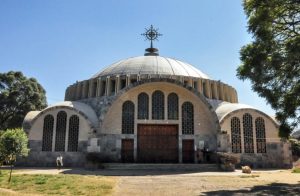
Forget Indiana Jones; the real adventure might just lead you to Axum, a city steeped in ancient history in northern Ethiopia. Here, within the heavily guarded walls of St. Mary of Zion church, rests, according to Ethiopian Orthodox tradition, the Ark of the Covenant – the sacred chest that once held the Ten Commandments given to Moses.

While concrete archaeological evidence remains elusive and the inner sanctum is off-limits to all but the appointed guardian monk, the unwavering belief of millions of Ethiopians lends an undeniable mystique to this claim. For centuries, the Ark has been central to their religious identity, its presence woven into the very fabric of their faith and national pride. Imagine a tangible link to one of the foundational stories of Western civilization, potentially residing in a relatively unassuming church in East Africa.
This deeply held conviction, passed down through generations, is a testament to Ethiopia’s profound connection to its ancient past and its unique interpretation of biblical history. The annual Timket (Epiphany) festival in Ethiopia sees a replica of the Ark, known as a tabot, paraded through the streets in vibrant processions, a powerful reminder of the Ark’s enduring significance.
2. The Only African Nation Never Colonized (Successfully):
During the Scramble for Africa, when European powers aggressively colonized the continent, Ethiopia uniquely maintained its sovereignty. Although Fascist Italy under their Prime Minister Benito Mussolini briefly occupied Ethiopia for five years, this was largely an unsuccessful attempt at colonization due to tenacious and ultimately victorious Ethiopian resistance.
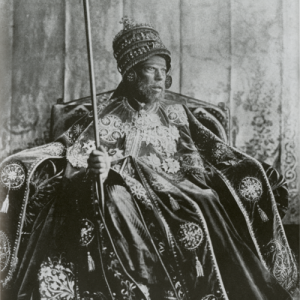
A pivotal moment in this history was Emperor Menelik II’s decisive victory over Italian forces at the Battle of Adwa in 1896. Fought on March 1, 1896, this battle was a monumental triumph for Ethiopia, preventing it from succumbing to colonization and serving as a powerful symbol of self-determination and national pride.
Ethiopia’s success in preserving its independence throughout this challenging period was a remarkable feat, attributed to its strong leadership, a unified national identity, and a formidable military. This unique historical path fostered a distinct cultural and political landscape, differentiating Ethiopia from many other African nations whose development was profoundly shaped by colonial rule.
3. The True Cradle of Coffee:

That energizing cup of coffee you enjoy every morning? You have Ethiopia to thank. The highlands of this East African nation are the birthplace of Coffea arabica, the most widely cultivated coffee species globally. Legend has it that a 9th-century goat herder named Kaldi noticed his goats behaving unusually energetic after nibbling on the bright red berries of a particular bush. Intrigued, he tried them himself and experienced a similar invigorating effect.
From these humble beginnings, coffee cultivation and consumption spread throughout Ethiopia, becoming deeply ingrained in its culture and traditions. The Ethiopian coffee ceremony is a beautiful and intricate ritual, a symbol of hospitality and community. The roasting, grinding, brewing, and serving of the coffee are performed with grace and care, often accompanied by incense and conversation. So, the next time you savor your morning brew, remember its Ethiopian roots and the rich history contained within each bean.
4. A Calendar Unlike Any Other:
While much of the world operates on the Gregorian calendar, Ethiopia proudly adheres to its own unique system. The Ethiopian calendar is a solar calendar that is about seven to eight years behind the Gregorian calendar. It has 13 months, 12 of which have 30 days, and a final, shorter month of five or six days, depending on whether it’s a leap year.
Furthermore, their day begins at what Western cultures consider 6:00 AM. So, when an Ethiopian says it’s 1:00, they likely mean 7:00 AM in the Gregorian system. This distinct way of tracking time reflects Ethiopia’s independent spirit and its commitment to its own traditions. It can certainly lead to some interesting logistical challenges for visitors, but it also indicates the country’s unique cultural identity.
5. A Land of Stunning Biodiversity and Endemic Wildlife:
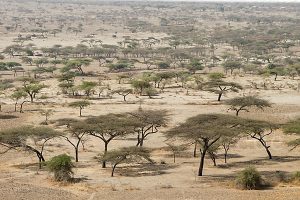
Beyond its rich history and culture, Ethiopia boasts breathtaking natural beauty and remarkable biodiversity. From the jagged peaks of the Simien Mountains National Park, home to the Gelada monkey and the Walia ibex (both endemic species), to the otherworldly landscapes of the Danakil Depression, one of the hottest and lowest places on Earth, Ethiopia offers a stunning array of ecosystems.
The country is also a crucial migratory route for birds and harbors a significant number of endemic plant and animal species found nowhere else on the planet. Imagine encountering the Ethiopian wolf, Africa’s rarest canid, or the vibrant plumage of endemic bird species flitting through lush forests. Ethiopia’s commitment to preserving its natural heritage is vital for global biodiversity.

6. The Origins of Human Ancestry:

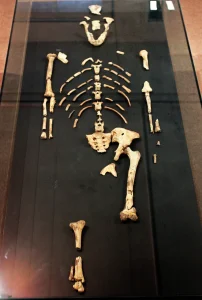
Ethiopia is not just ancient in terms of its civilization; it holds a pivotal place in the story of humankind itself. The Afar region of Ethiopia is renowned as the cradle of humanity, yielding some of the most significant hominin fossils ever discovered. The most famous of these is “Lucy” (Australopithecus afarensis), a 3.2-million-year-old skeleton that provided crucial insights into early human evolution and bipedalism.
Discoveries like Lucy, along with numerous other hominin fossils and Stone Age tools found across Ethiopia, offer compelling evidence that our earliest ancestors roamed these lands millions of years ago. Walking on Ethiopian soil is, in a sense, walking on the very ground where humanity took its first steps. This profound connection to our shared origins makes Ethiopia a truly special and significant place on Earth.
It’s time to add Ethiopia to your list of must-see destinations, a place where history, culture, and nature converge in truly amazing ways.


